
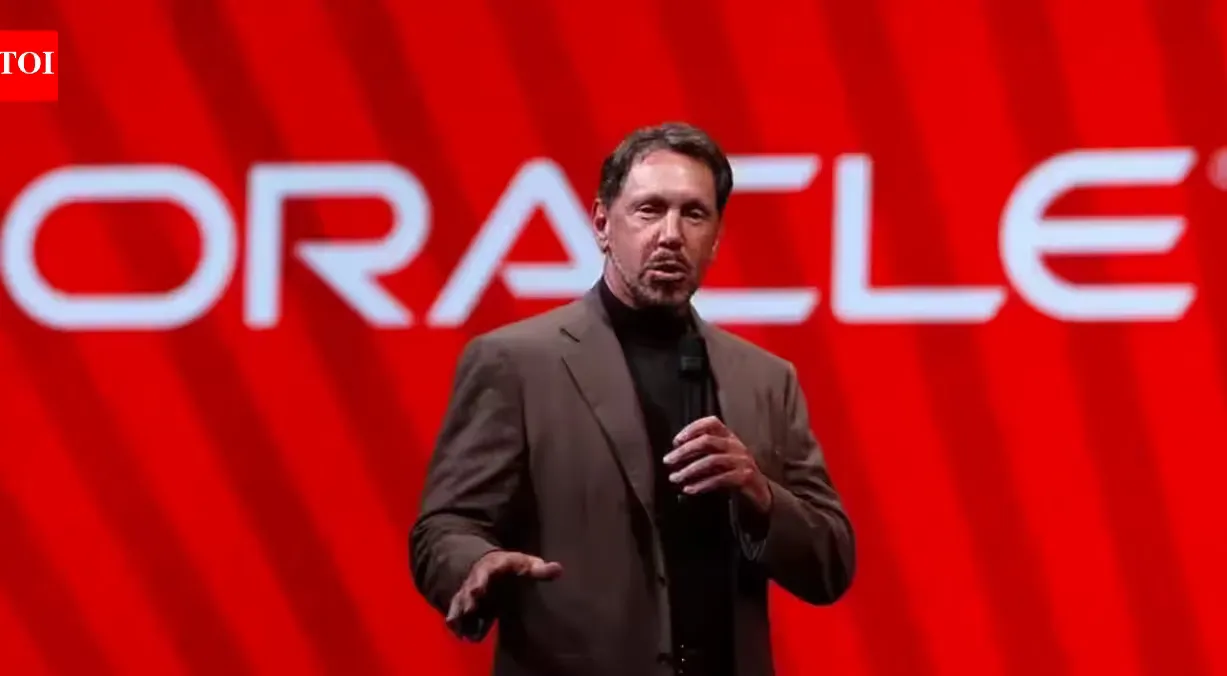
Oracle is attempting to put anxious shareholders at ease by placing a firm cap on how much more it will borrow to fuel its artificial intelligence ambitions. During a recent investor day in Las Vegas, Chief Financial Officer Hilary Maxson announced that the tech giant will not seek more than 20 billion dollars in additional financing through fiscal 2030. This move comes as a direct response to growing fears that Larry Ellison’s aggressive push into data center expansion would require an endless stream of outside capital.
The urgency for this pledge stems from the fact that Oracle lacks the massive, consistent revenue cushions enjoyed by rivals like Amazon and Microsoft. Instead, Oracle has leaned heavily on a high stakes partnership with OpenAI, which has filled their order books with billions in future business but requires immense upfront spending to build out the necessary infrastructure. To bridge this gap, the company has relied on significant debt and share sales, leading some investors to worry about the long term sustainability of its balance sheet.
To stabilize its finances, Oracle plans to pivot away from traditional borrowing by utilizing vendor financing and accepting advance payments from customers. The goal is to reach positive free cash flow by the second half of fiscal 2028, eventually topping 30 billion dollars by 2029 as capital expenditures begin to taper off. By capping further fundraising at 20 billion dollars split between debt and equity, leadership hopes to prove that there is a strategic plan behind what some perceive as reckless spending.
Market observers suggest that while these goals are highly ambitious and far from certain, they signal that Oracle is finally listening to Wall Street. Analyst Jacob Bourne noted that the company is essentially trying to demonstrate there is a method to the madness of its infrastructure blitz. If successful, Oracle believes it can slash its net debt relative to earnings by fiscal 2029 and end its dependence on external funding entirely, transforming from a speculative builder into a sustainable AI powerhouse.